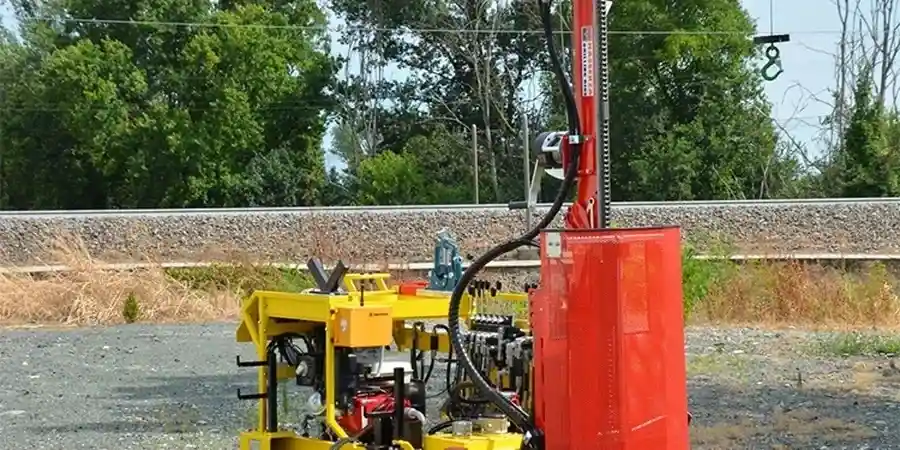
The Fall Line geology that runs through Columbus Georgia creates a sharp transition between the crystalline Piedmont bedrock to the north and the softer Coastal Plain sediments to the south. This abrupt change means that a site on the north side of town might hit refusal in weathered schist at 15 feet while a parcel just two miles south encounters 80 feet of alluvial sands and silts deposited by the Chattahoochee River. Running the SPT (Standard Penetration Test) under these conditions requires adapting the hammer energy and sampler advance to the material, because split-spoon refusal in decomposed rock tells a very different story than N-values climbing gradually in dense river terrace sands. We combine the SPT with grain-size analysis when the cuttings are silty enough to influence liquefaction susceptibility, and we reference CPT correlations for sites where the client needs a continuous stratigraphic profile across the variable Fall Line deposits that characterize the Columbus area.
An SPT N-value measured in Columbus alluvium without energy correction can overstate relative density by 40% — our calibrated N60 profiles eliminate that bias.
FAQ
How much does SPT testing cost for a residential lot in Columbus Georgia?
For a typical single-family residential site requiring two borings to 25 feet depth with full N60 correction and a signed geotechnical report, the cost ranges from US$580 to US$670. The exact figure depends on access conditions, the number of SPT intervals, and whether lab testing (grain-size, Atterberg) is added to the scope.
What is the minimum number of SPT borings required for a commercial building permit in Columbus?
The IBC 2021, adopted by Georgia, does not prescribe a fixed minimum number — it requires enough borings to define the subsurface variability across the building footprint. For a commercial structure under 5,000 square feet on uniform ground, two borings may suffice; for a larger footprint or a site straddling the Fall Line where soil types change abruptly, we typically recommend a grid of four to six borings to capture the transition zone.
How do you correct SPT N-values for the residual soils found in Columbus?
We apply the standard correction chain: first, energy correction to N60 using our hammer's calibrated energy ratio; second, overburden correction using the Liao and Whitman (1986) equation CN=(Pa/σ'v)^0.5 capped at 2.0; third, rod-length correction per ASTM D1586 for depths exceeding 30 feet. In residual soils where the sampler encounters partially weathered rock fabric, we flag the N-value with a note indicating possible interference from relic jointing, because the corrected N60 may still overestimate the true relative density of the matrix.